
Ask a Librarian
On bad assumptions, an overdue book, and the magical people who help us make sense of the world.

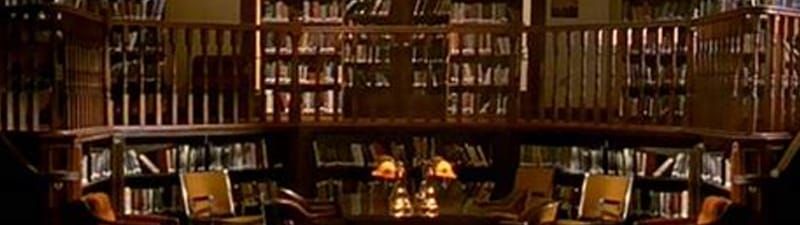
The trouble with knowledge is that it can look an awful lot like understanding when, really, it isn't. You can find a book, repeat a fact, quote a headline, and still have no idea what to do with any of it. Sometimes you need another person to help you ask a better question. Sometimes you need them to slap you firmly in the face and tell you to stop being so bloody stupid.
Mrs Hodgekins was very good at that. The former, not the latter.
Vera Hodgekins was the librarian at my school, where the library became a lifeline for a quiet, closeted queer kid growing up under the shadow of Section 28. The law made certain things unspeakable. Mrs Hodgekins couldn’t make that disappear. She could, however, recommend books, and she made a space in which curiosity felt welcome, even when I didn’t yet have the language for what I was curious about.
At school I was... a lot. I was an overconfident, overly camp teenager, who often found themself announcing an ill-conceived conclusion about the world before having actually learned anything about it. Once, I told her I hated thrillers. She gave me John Grisham’s The Street Lawyer. I’ve written before about having to go back and admit she was right. Librarians must get a particular pleasure from that.
The education went both ways. Mrs Hodgekins thought electronic music was loud and rude and came with horrible lyrics and rude words. On one of the library computers, I showed her some calm, beautiful MOD tracked music in Scream Tracker, complete with lyrics. She listened, was impressed, and thanked me for widening her horizons. She turned a blind eye to my hacking endeavours on those early computers, too, as long as I left them usable for whoever came next.
I liked the library at school so much that I signed up to be a student librarian, along with my cool-yet-bookish friend Judith. She was in the year above me and desperately wanted to be a lawyer. It was to Judith, in that library, that I first came out, using actual real words, to another person, thanks in no small part to the safe space that Mrs Hodgekins had created. She had helped make a room in which it could happen, even when the silence around us meant she couldn’t simply step in and make everything all right. Judith was the person who heard me.
The work of making knowledge available goes back millennia. At Nineveh, Ashurbanipal and his chief scribe shaped a collection of thousands of clay tablets. It was a king’s library, built for an empire rather than the public, but somebody still had to gather and organise what it held. At Alexandria, Callimachus compiled a catalogue so people could navigate a vast collection. Nearly two thousand years later, the librarian S. R. Ranganathan wrote, “Every reader his book.” The wording has aged; the attention to the reader hasn’t.
Years later, while clearing out my mum’s old house, I found a copy of Ernest Hemingway’s The Old Man and the Sea from Maida Vale Library. It was due back on 5 July 1975. I emailed to ask whether they wanted it back, with some concern about what fifty years of overdue charges might look like. Gordon, a clearly bemused librarian who wasn't even alive at the time the book was due back, replied to say that he thought it'd be okay if I kept the book, not to worry about the late fees, and offered his condolences for my loss. He hadn't seen a practical question, instead he had seen the person asking it, the context surrounding it, and - thankfully - the humour amongst the clouds.
I hope I get to buy Gordon a drink one day to say thanks.
I've come to the conclusion that librarians are real life magicians. Their presence, grace, awareness, and inability to be phased by even the stupidest of question... it feels like something the world needs so much. more of. Which is why it is so frustrating that they're increasingly undervalued and underpaid.
Physical library visits in Great Britain rose in 2023/24 while paid staff numbers fell. How is that even remotely possible? We need librarians more than we need politicians, yet there are less of them earning less money than ever before.
A librarian's skills matter well beyond the shelves. A library can hold a false claim as easily as a true one, and the internet can put either in front of us before we’ve finished our next thought. A good librarian won’t have every answer, but they can help us find where a claim came from, what else we ought to read now, or read next, and, crucially, they can tell us whether our first, very confident interpretation of the world survives a second look.
I sometimes think that, if society collapses, librarians will turn out to be the superheroes we all flock to. They’ll know where to begin with food, construction, safety, and keeping a community together.
George Needham called libraries “first restorers” after a crisis. Let's maybe try to value them, and the incredible people who keep them running, a little more in the present, before the collapse of civilisation as we know it.
After all, keeping knowledge safe is only half the job. We need people who can help us question it, understand it, and, crucially, pass it on.

PS - I'd love to do more talks and readings in libraries. Next time you're in one, please drop a hint to the librarian in charge.