
Respecting The Reader
How autism taught me that books should open doors, not give you a rulebook.

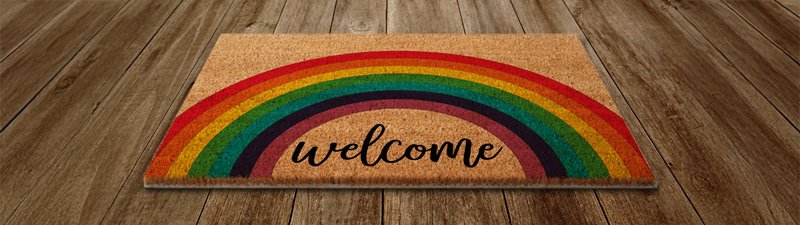
Something that's always on my mind, both as a reader and as a writer, is how people enter a book.
I'm not talking about paper vs ebook, nor about the way they’re meant to read or interpret them. Just... how they come through the door.
It's like walking into an AirBNB. Is there simply a welcome mat and a key? Or is there a twelve-page guidebook telling you what tiles to walk on and which forks you're allowed to use for cake.
I once stayed somewhere that forbade you from eating anything green inside the property. Seriously.
For me, the idea of being handed a set of rules for anything has been complicated. As an autistic person, rules are often helpful. Clarifying. Kind, even. But more often than not rules designed to be all of those things are anything but. They're brittle. Unenforcable. Full of unspoken assumptions about what kind of person you are, how you process information, and what you’re “supposed” to notice first.
I’ve spent a lot of my life trying to work out whether I was following the rules correctly, only to discover later that the rules were never as fixed as they pretended to be. Or worse, that they weren’t written with someone like me in mind at all.
I think the same is true when you enter the world of a new story for the first time.
And so, when I write, I try to be mindful of that. I don’t want a book to feel like a test. Or a puzzle with a single correct solution. I don’t want readers to feel they’re being watched, or judged, or quietly scored on whether they’ve “got it”.
Instead I want to trust the reader - give them the keys, and let them live in the story however they feel most comfortable.
The Boy From Elsewhere was written with an implicit trust of its reader. Trust that they'll bring their own curiosity. Trust that they'll notice what matters to them. Trust that they might skim some bits, linger on others, miss things entirely the first time round and come back to them later. All of that is part of reading. All of that is allowed.
That trust extends to who the reader is, too. This is a young adult book, yes, but I don’t believe teenagers need things simplified or smoothed over for them. And I don’t believe adults need to be told that they're "too grown up" for reading YA themselves. Teen or adult, a reader is a thinking, feeling human being, and I’ve written the book with that in mind.
One of the most exciting things about being this close to publication is knowing that the book is about to become many different books at once. Different readers will see different things. Characters will land differently. Moments that feel small to one person might feel huge to another.
That's terrifying, but SO exciting. And my autistic, rule-following-yet-also-rule-breaking self can't wait.
If there’s one thing I hope you feel when you pick this book up, it’s not pressure. It’s permission.
Permission to explore. To wander. To make yourself at home. To trust your own reading of it, even if it’s not the same as mine.
The key's under the mat. There are sandwiches in the kitchen.
Make yourself at home.
The Boy From Elsewhere