The Longest Two Weeks in History
Thoughts on remembering a day that it seems we'd all rather forget.

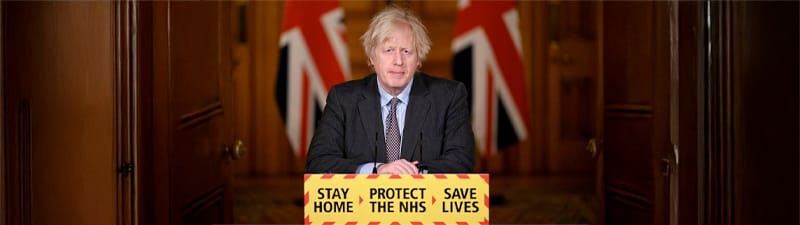
Six years ago today, the UK went into lockdown.
Somehow it feels like it was a hundred years ago. Somehow it feels like it was yesterday. And, while both of those things feel real, the whole thing also feels totally unreal. Like it was just a weird sort of fever dream we had once.
The UK national lockdown was supposed to last two weeks. Boris Johnson graced our screens and asked us to give him two weeks to flatten the curve. Two weeks to stay home, reorganise our lives, and emerge blinking into daylight at the end of it, safe and sound. And so began longest two weeks in history.
It was, we were told repeatedly, an unprecedented time.
I have never heard a word used so enthusiastically and so relentlessly in my life. Every email, every announcement, every carefully worded message suddenly began with “In these unprecedented times…”
Unprecedented wasn't the only word that suddenly entered common usage. We suddenly started saying things like lockdown, social distancing, support bubbles, and furlough.
Furlough. That was a word that landed with a thud. One day it meant nothing to most of us, the next day it meant everything. It meant waiting. It meant uncertainty. It meant sitting at home trying to convince yourself that this was temporary.
So, we stocked cupboards with whatever we could find on the half-empty supermarket shelves. We learned how to bake bread with the dedication of medieval monks. Half my friends became overnight experts in yeast and hydration levels and were busy naming their sourdough starters like it was a human child.
What else were we meant to do?
These were, after all, unprecedented times.
Human beings have been around for a pretty long time and, arguably, have lived through some pretty big stuff. I'm talking ice ages, famines, lethal pandemics, and if one book is to be believed, an all-encompassing flood. Facing the unprecedented is in our DNA.
Looking back now, it’s difficult to explain just how much shifted during those early months. Plans dissolved. Work changed. Paths that once felt certain suddenly vanished or twisted into something entirely unfamiliar. There were moments when life felt like it had been lifted off its foundations and set down again slightly askew, never quite lining up the way it used to.
And yet, in the middle of all that upheaval, life didn’t stop. We found ways to fill the time. Board games appeared. New hobbies materialised out of boredom and stubborn optimism. People discovered talents they never knew they had. Everyone seemed to suddenly get really into banana bread, for some reason.
For me, one of those unexpected yeses was a charity writing challenge during the first lockdown. It seemed like a small thing at the time, a way to stay occupied and raise some money for a good cause while the world outside felt uncertain and slightly unreal.
That small thing became the first draft of The Boy From Elsewhere. A whole book that exists now because, at some point in the middle of all that strangeness, I decided to sit down and write instead of staring endlessly at news updates.
It's been six years since lockdown, and life looks "normal" again. Streets are busy. Cafés are loud. Nobody talks about banana bread.
And I think that's part of how humans have survived so long.
There’s a theory that people forget the pain of childbirth, because if we remembered it fully, we might never do it again. Perhaps that's also true of the pandemic.
We carried lessons from lockdown, whether we wanted to or not. We've learned that certainty is a fragile thing. That the future is never quite as predictable as we like to pretend. That entire lives can pivot in the space of a few announcements and a handful of unfamiliar words.
And we learned, perhaps more importantly, that humans are remarkably good at forgetting, adapting, and moving on when we have no other choice. We said yes to things we didn’t fully understand. Yes to new paths. Yes to finding humour in absurd situations. Yes to surviving days that felt endless, and weeks that somehow passed in the blink of an eye.
Six years on, the whole thing still feels faintly unreal.
Like something that happened to a different version of us, in a parallel timeline. It’s easy to look back and file the memory away as something neat and manageable.
But it wasn’t neat, and it was barely manageable. Like many, I suffered loss during the pandemic. I carry anger, frustration, and so many questions about the how, and the who, and the why. Yet still we made things. Created. Loved. Laughed. Found small pockets of joy in places we never expected to find them.
The world may have forgotten that wearing masks saves lives. It may have forgotten that personal space should be respected. It may even have forgotten how to keep a sourdough starter alive.
But I don't want to forget. Not all of it, anyway. Because those moments of light in the darkness? The glimmers of joy in an otherwise hard, irrevocably painful time? That's a level of hope that inspires me, even today.
Perhaps remembering that is the only truly unprecedented thing after all.